Car Life Saving Two-in-one Solid Hammer with ABS Housing and Carbon Steel Hammer Head - Red Emergency Vehicle Safety Tool for Breaking Car Windows and Cutting Seatbelts


Car Life Saving Two-in-one Solid Hammer with ABS Housing and Carbon Steel Hammer Head - Red Emergency Vehicle Safety Tool for Breaking Car Windows and Cutting Seatbelts
Car Life Saving Two-in-One Solid Hammer: Emergency Vehicle Escape Tool with Carbon Steel Breaker

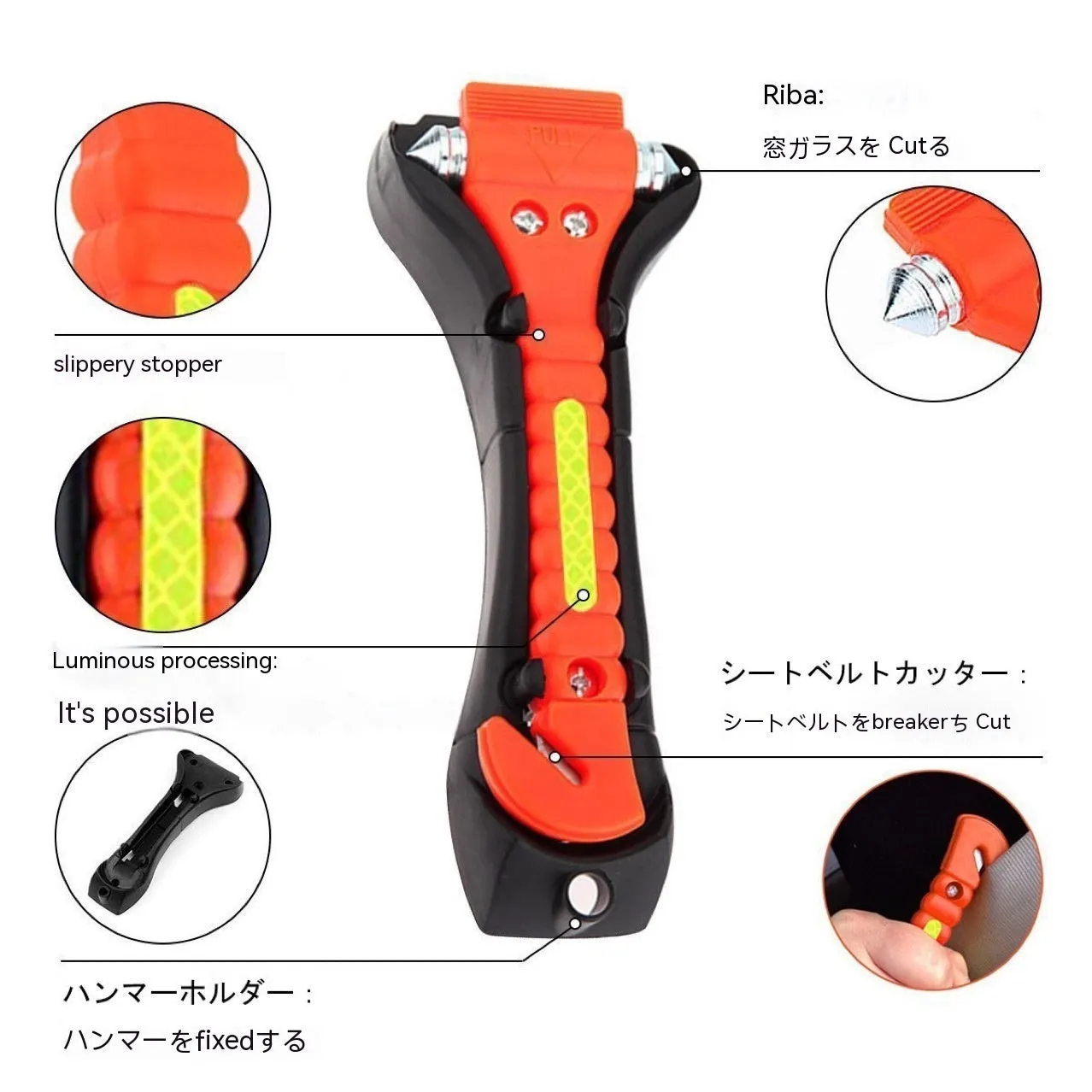
This car life saving hammer consolidates two vital emergency functions into a single, readily accessible tool designed for vehicle occupants. It addresses the specific hazard of being trapped inside a car after a collision, rollover, or submersion, where standard door operation may be impossible. The tool's primary purpose is to facilitate escape by providing a dedicated means to fracture a side window—typically made of tempered safety glass—and a secondary method to sever a seatbelt if its buckle is damaged or inaccessible. Its solid construction and specific material choices aim to deliver the necessary concentrated force while remaining storable within the confined spaces of a car's interior. The vivid red colour is a practical feature for visibility, aiding quick retrieval during the high-stress, time-critical circumstances of an automotive emergency.
Features and Construction
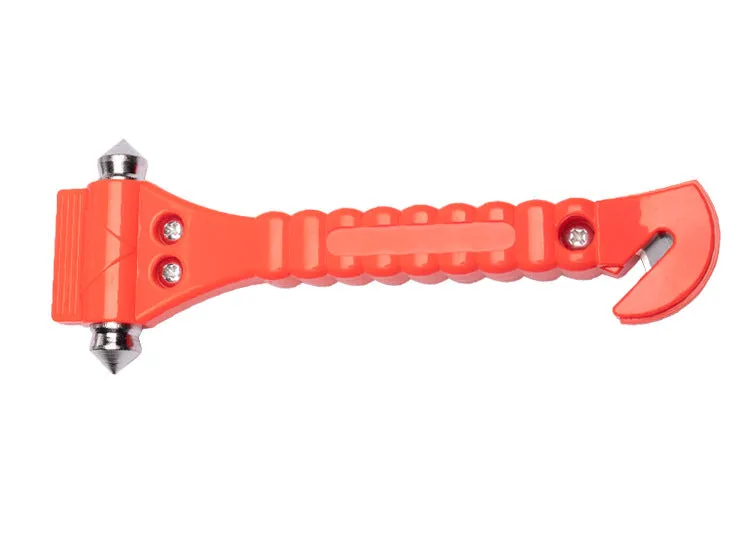
The tool's design is defined by its dual-purpose functionality and the material selection for each critical component. It is described as a 'solid hammer', indicating a construction focused on robustness and impact delivery rather than modular or foldable designs. The two-in-one nature means drivers do not need to source and store separate tools for window breaking and belt cutting, simplifying emergency preparedness. The build prioritises immediate use without assembly, which is crucial when seconds count and fine motor skills may be impaired by shock or injury.
Material and Build
The housing is constructed from ABS plastic, a common engineering thermoplastic valued for its good impact resistance and rigidity. This material choice creates a protective shell for the internal mechanism and provides a grip surface. The hammer head itself is made from carbon steel, an alloy known for its hardness and strength, which is necessary to focus impact energy onto a small point on the window surface. The marriage of a tough plastic exterior with a hardened steel core aims to create a tool that can withstand the force required to shatter glass without failing structurally. The construction suggests a permanent assembly, with the steel head securely integrated into the ABS body.
Size and Practical Fit
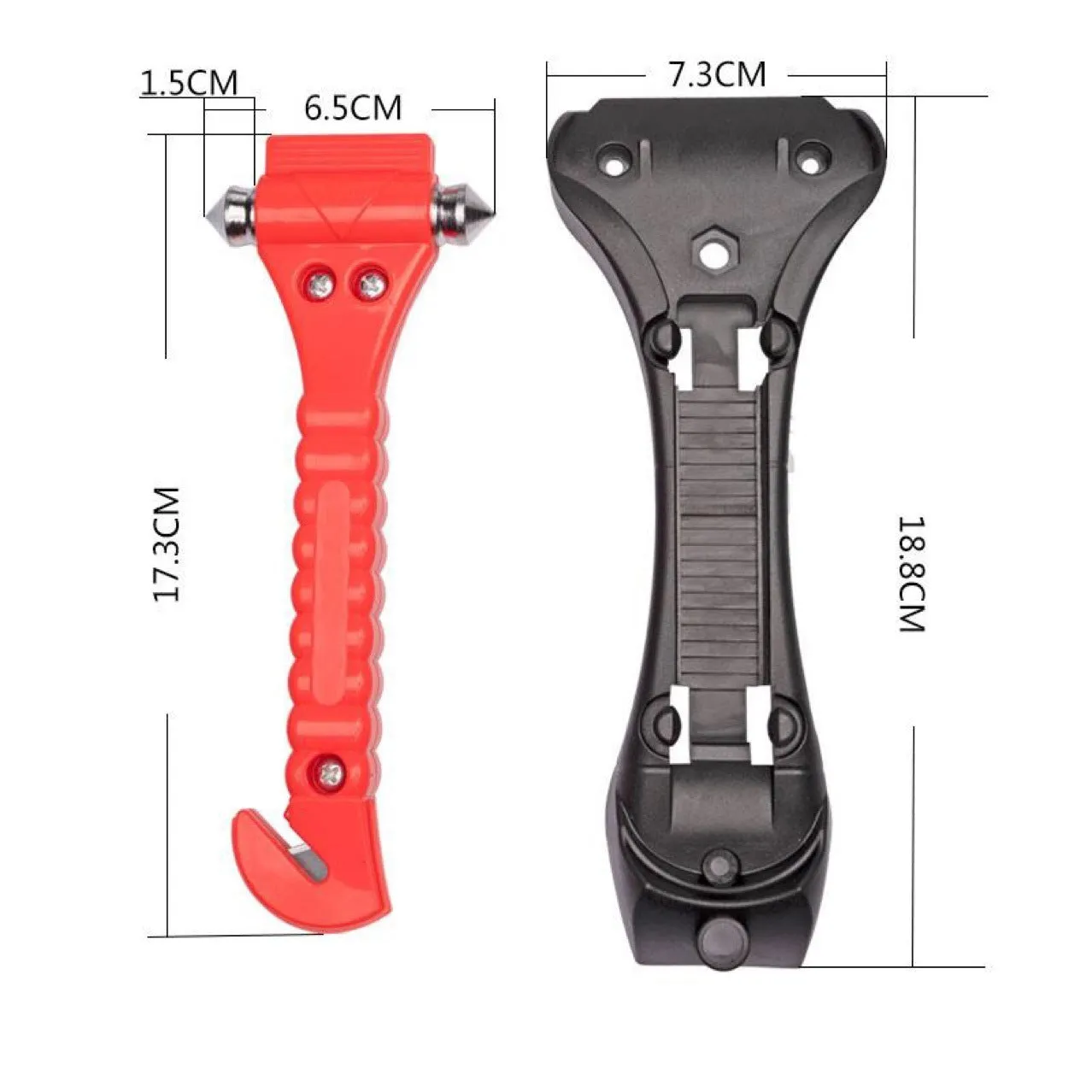
While exact dimensions are not provided, the product is clearly designed as a handheld tool intended for storage within a vehicle cabin. Its form factor must balance being large enough to grip firmly and swing with adequate force, yet compact enough to fit in common storage areas like glove boxes, centre console bins, or door map pockets. The 'solid' descriptor implies a certain heft and density, contributing to the momentum needed for breaking glass. The tool's portability is a key feature, as its value is contingent on being immediately available at the point of need, not stored in a boot or toolkit buried under other items.
Uses and Placement

The tool serves a highly specific, safety-critical use case: facilitating occupant escape from a vehicle when standard exits are blocked. Its value is realised only in emergency scenarios, making correct placement and user awareness as important as the tool itself. Understanding the typical points of failure in a vehicle after a crash—jammed doors, electrical system failure locking power windows, or a seatbelt pre-tensioner locking the buckle—informs the logic behind this product's design and recommended storage.
Event or Professional Use
While primarily a consumer automotive product, similar tools are standard issue for some professional drivers, emergency response personnel, and in fleet vehicles. In professional contexts, such tools might be part of a mandated safety kit, particularly for vehicles that operate near water, carry hazardous materials, or are used in remote areas. The tool's reliability and simplicity are advantages in these settings, where training on use can be straightforward. It serves as a last-resort mechanical override when other safety systems have failed or are insufficient.
Everyday Home Use
For the private motorist, this tool is an element of proactive safety planning. It is intended to be stored in the passenger compartment and ideally discussed with all regular occupants so everyone knows its location and purpose. Its presence is a precaution, much like a first-aid kit or fire extinguisher. For it to be effective, it must be integrated into the driver's mental map of the car's contents. It is not a tool for everyday use but for a single, critical moment. Some users may also consider it for other vehicles like caravans, motorhomes, or boats where similar egress challenges exist.
Benefits and Buying Value
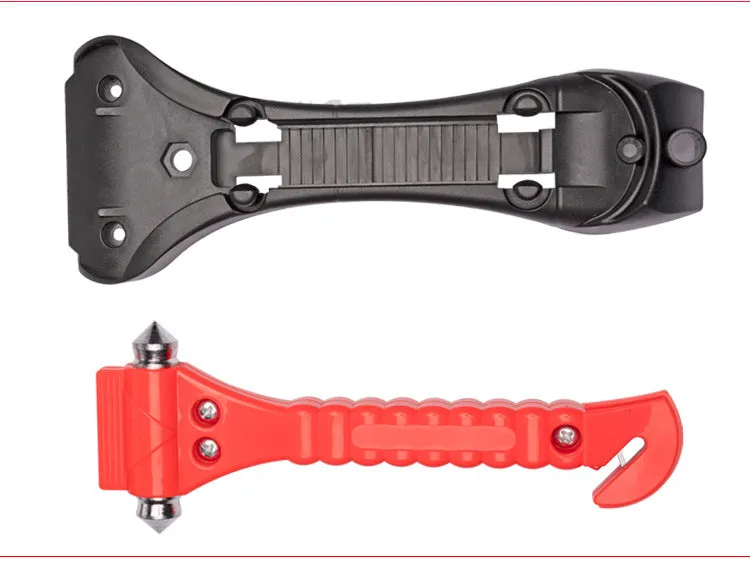
The primary value proposition is preparedness and the potential to enable self-rescue in a life-threatening situation. It transforms a recognised vulnerability—being trapped in a metal and glass shell—into a scenario with a planned, mechanical solution. The product offers a focused answer to the question, "What if I need to get out and the doors won't open?" Its value is not measured in frequent use but in the profound consequence of its single, intended use.
Reuse and Low Maintenance
The tool requires virtually no maintenance beyond ensuring it remains accessible and free from corrosion on the steel components. It is a single-purchase item designed to last for the lifetime of the vehicle (or longer), assuming it is never used. If used, it is typically a single-use device for the window-breaking function, though the seatbelt cutter could be used multiple times if needed. There are no moving parts to lubricate, no batteries to replace, and no expiry date, contributing to its set-and-forget nature. The durable ABS and carbon steel construction is chosen for long-term stability in the variable temperature and humidity environment of a car interior.
Why Choose This Product
Choosing this product involves recognising that while modern vehicles have many safety features, they can still fail in ways that trap occupants. This tool provides a mechanical, human-powered backup. The two-in-one design eliminates the need to choose between a window punch and a belt cutter, simplifying the emergency kit. The specific material callouts—ABS and carbon steel—provide tangible information about its construction compared to more vague descriptions. The bright red colour is a practical differentiator for quick identification. Ultimately, it is selected for peace of mind derived from having a dedicated, optimised tool for a specific worst-case scenario, rather than relying on improvised methods that may fail under pressure.