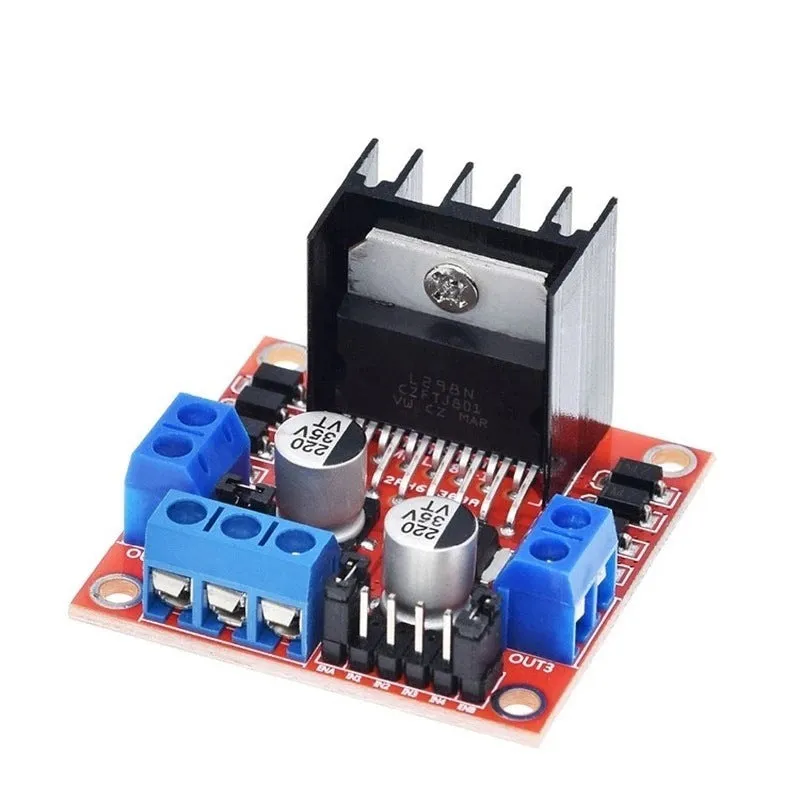
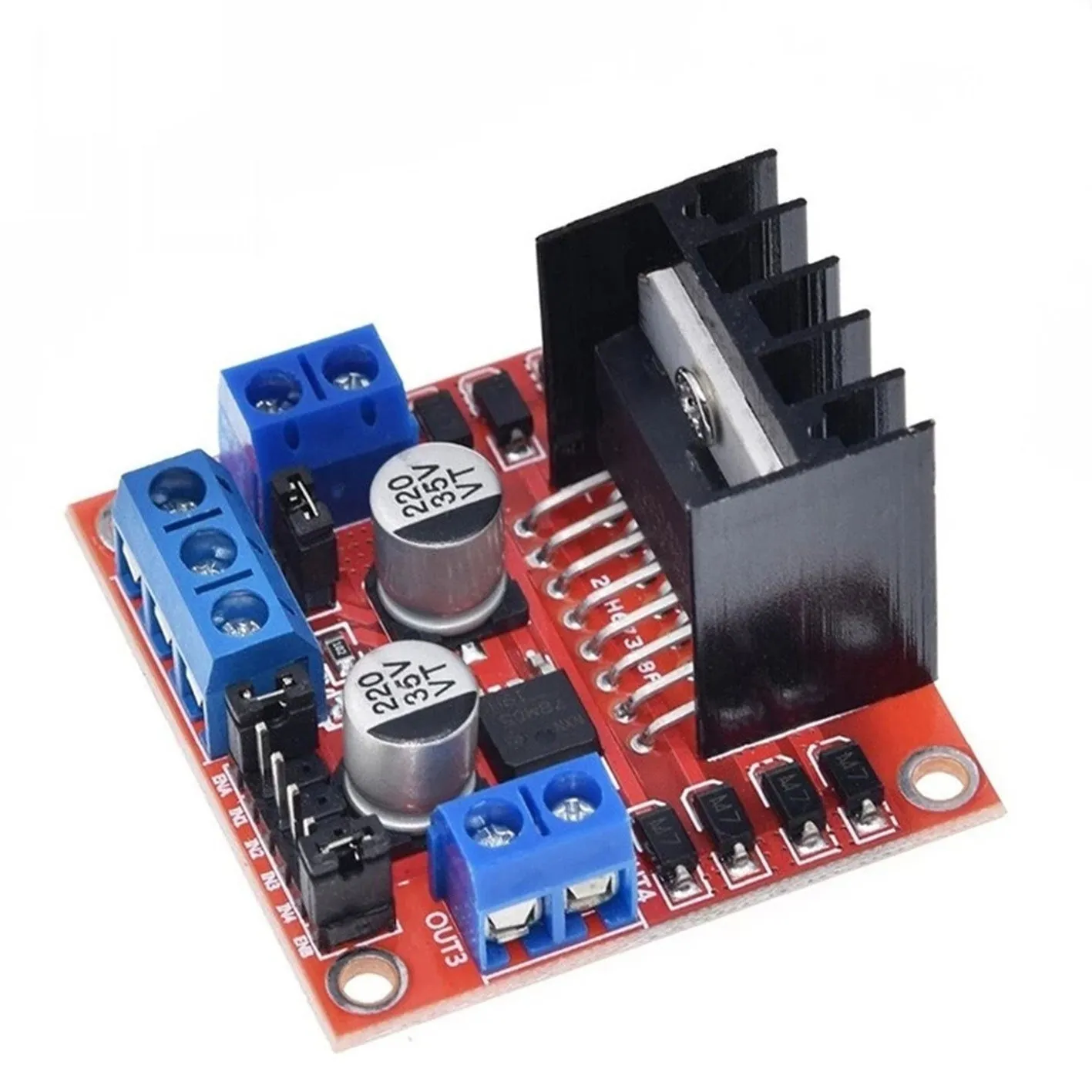
L298N Motor Driver Board Module with H-Bridge Circuit for DC and Stepper Motors - 25W Power, 2A Peak Current, 5V-35V Input Range - Suitable for Intelligent Vehicles, Robotics, and DIY Projects


L298N Motor Driver Board Module with H-Bridge Circuit for DC and Stepper Motors - 25W Power, 2A Peak Current, 5V-35V Input Range - Suitable for Intelligent Vehicles, Robotics, and DIY Projects
L298N Motor Driver Module: Dual H-Bridge Control Board for DC Motors, Stepper Motors, and Robotics
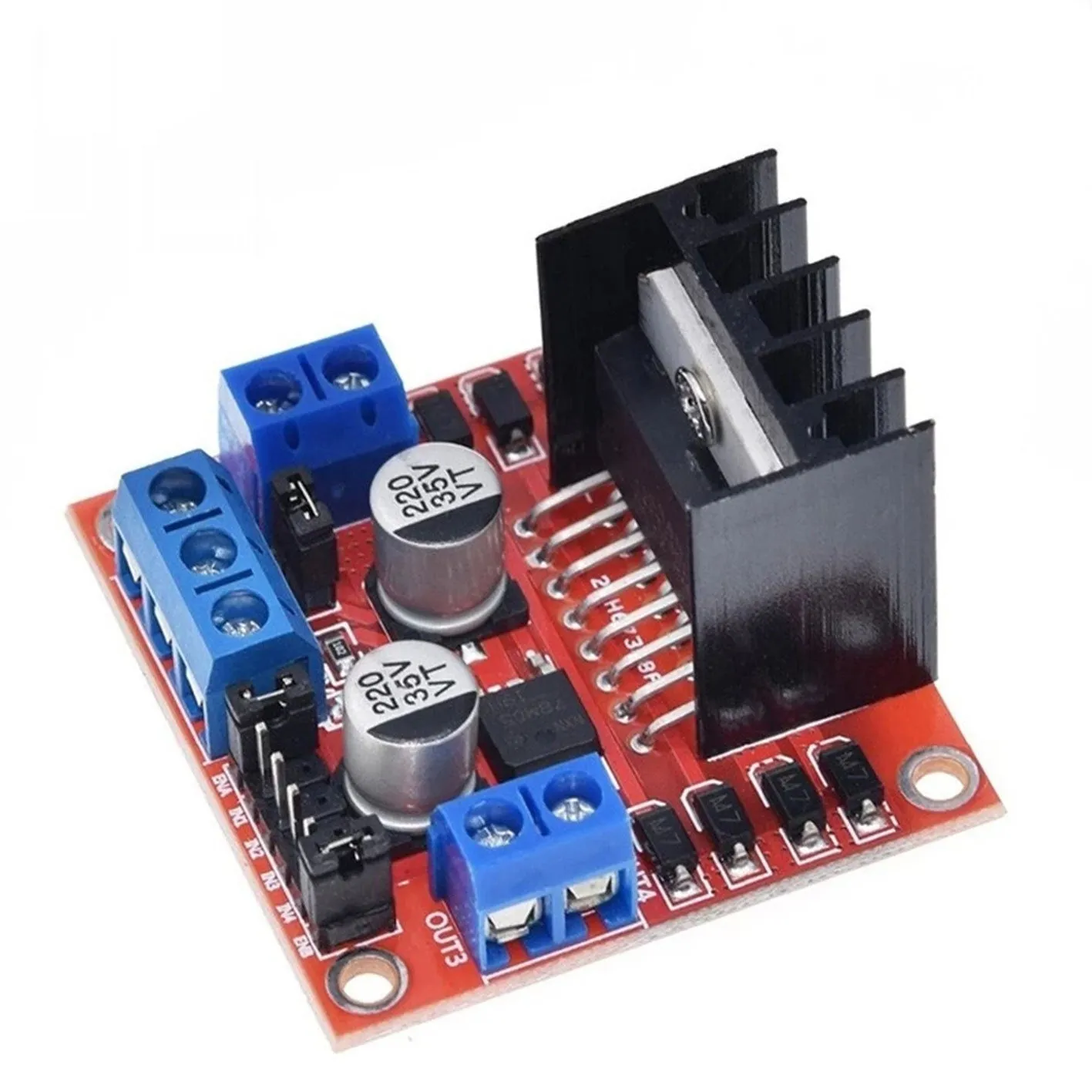
This L298N motor driver module serves as a fundamental building block for electronics projects involving motor control, particularly in robotics, intelligent vehicles, and automation systems. Built around the established L298N integrated circuit, it provides a dual H-bridge configuration that allows you to independently control two DC motors bidirectionally or drive a single bipolar stepper motor with full-step or half-step sequences. The module accepts a broad driving voltage range from 5V to 35V, making it compatible with various power sources from USB power banks to higher-voltage battery packs, while requiring only a separate 5V supply for its logic circuitry to interface with microcontrollers like Arduino, Raspberry Pi, or other development boards.
Features and Construction
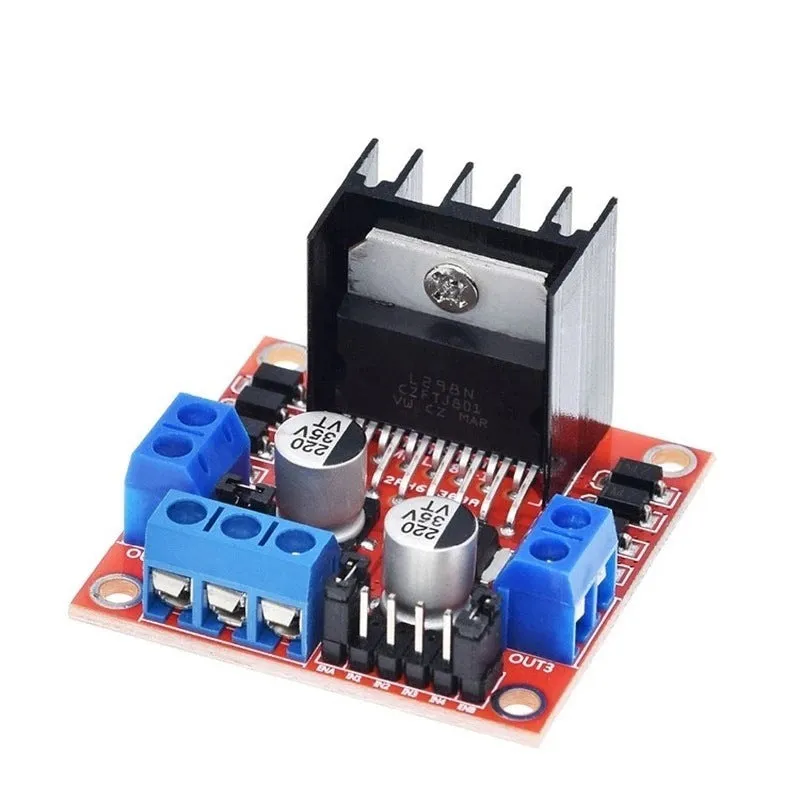
The module's design centres on delivering core motor driving functionality with clear electrical specifications and physical dimensions that suit integration into custom projects. Its construction prioritises the essential components needed for the H-bridge operation without adding integrated speed controllers or complex user interfaces, which keeps the board straightforward for those who prefer to implement speed control via external microcontroller PWM signals.
Material and Build
The module is constructed on a standard printed circuit board (PCB) that hosts the L298N driver chip, supporting passive components such as resistors and capacitors, and screw terminals or pin headers for connecting power, ground, control signals, and motor outputs. The L298N chip itself is a dual full-bridge driver capable of handling inductive loads like motors, with built-in protection diodes to manage back EMF generated when motors decelerate or change direction. The board's 25W total power rating indicates its capacity for continuous operation under typical loads within its current and voltage limits.
Size and Practical Fit
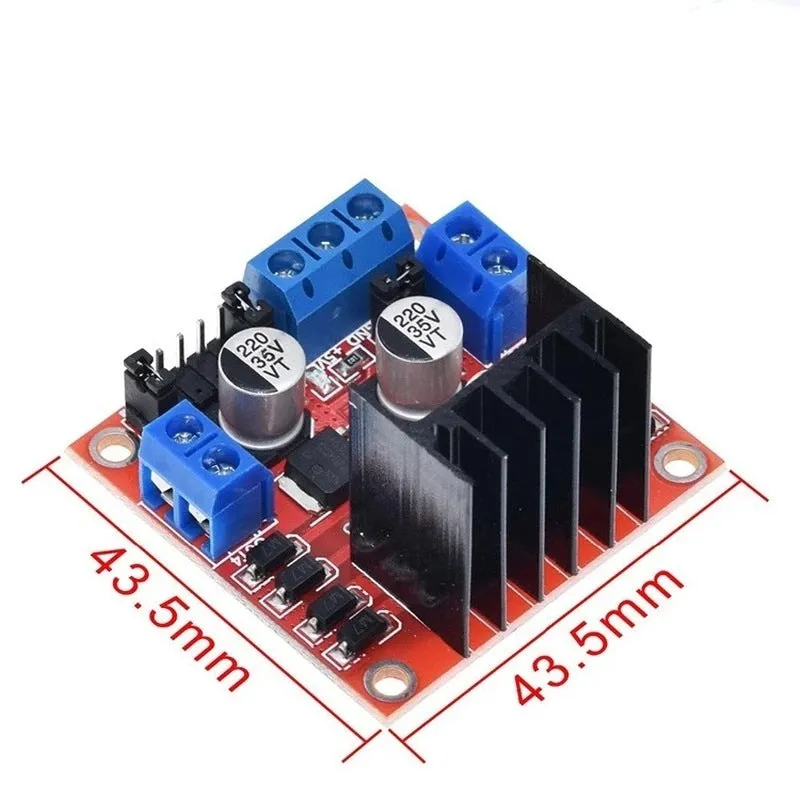
With compact dimensions of 43mm in length, 43mm in width, and 27mm in height, the module occupies minimal space on a project chassis or breadboard area. This size makes it suitable for embedding into mobile robots, small vehicles, or enclosed control boxes where internal volume is limited. The 30g weight adds negligible mass to most projects, ensuring it doesn't significantly impact the overall weight distribution of lightweight robotic platforms or flying drones where every gram counts.
Uses and Placement
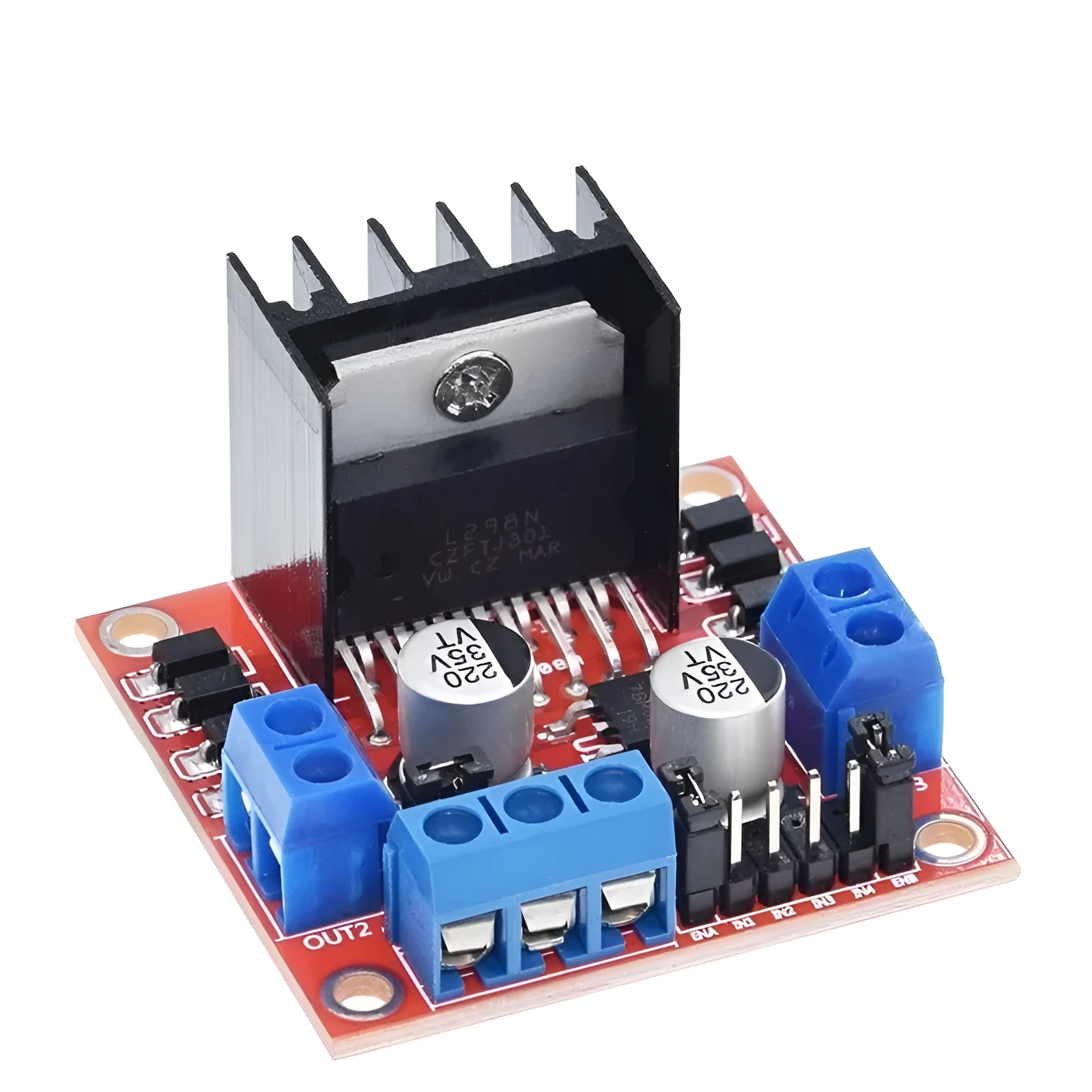
This driver module finds application in both educational settings and functional DIY builds where motor control is a primary requirement. Its design parameters support a range of motor types and sizes, provided they fall within the specified current and voltage boundaries, allowing makers to progress from simple directional control to more complex speed-regulated movements.
Event or Professional Use
In robotics competitions, science fairs, or university engineering projects, the module offers a reliable and well-documented motor driving solution that teams can incorporate into their designs without designing custom H-bridge circuits from discrete components. For prototyping in professional environments, it provides a quick way to test motor compatibility and control algorithms before committing to a custom-designed PCB, saving development time and reducing initial project costs. The storage temperature range of -20°C to 135°C indicates suitability for indoor workshop environments and temporary outdoor use during testing phases.
Everyday Home Use
For hobbyists and DIY enthusiasts working on home automation, model railways, or customised gadgets, the module enables control of small DC motors found in household appliances, toy vehicles, or personal fabrication tools. Its ability to interface with popular microcontroller platforms via 5V logic signals makes it accessible to users with basic electronics knowledge, allowing them to add motorised elements to smart home projects, artistic installations, or educational demonstrations without needing advanced circuit design skills.
Benefits and Buying Value
The module's value lies in its specificity and adherence to a known industrial chipset, providing a tested foundation for motor control projects. It removes the need to source and solder individual transistors and diodes for H-bridge construction, offering a pre-assembled solution that reduces build time and potential wiring errors.
Reuse and Low Maintenance
As a solid-state electronic module without moving parts, it requires no routine maintenance beyond ensuring clean electrical connections and avoiding exposure to moisture or physical impacts that could damage the PCB or components. Its design allows for reuse across multiple projects—once a vehicle or robot is disassembled, the driver module can be detached and repurposed for a new build, provided it hasn't been operated outside its specified ratings. The absence of mechanical wear components contributes to this longevity under normal operating conditions.
Why Choose This Product
Choosing this specific L298N module provides a known quantity with documented electrical characteristics: a 5V logic supply requirement, a 5V-35V driving voltage range, a 2A peak current per bridge, and 25W total power handling. These concrete specifications allow you to match it confidently to your motor's requirements and power supply options. For projects where these parameters align with your motor's needs and your microcontroller can supply the necessary control signals, it offers a straightforward path to implementing motor control without overcomplicating the design or overspending on capabilities you won't use.