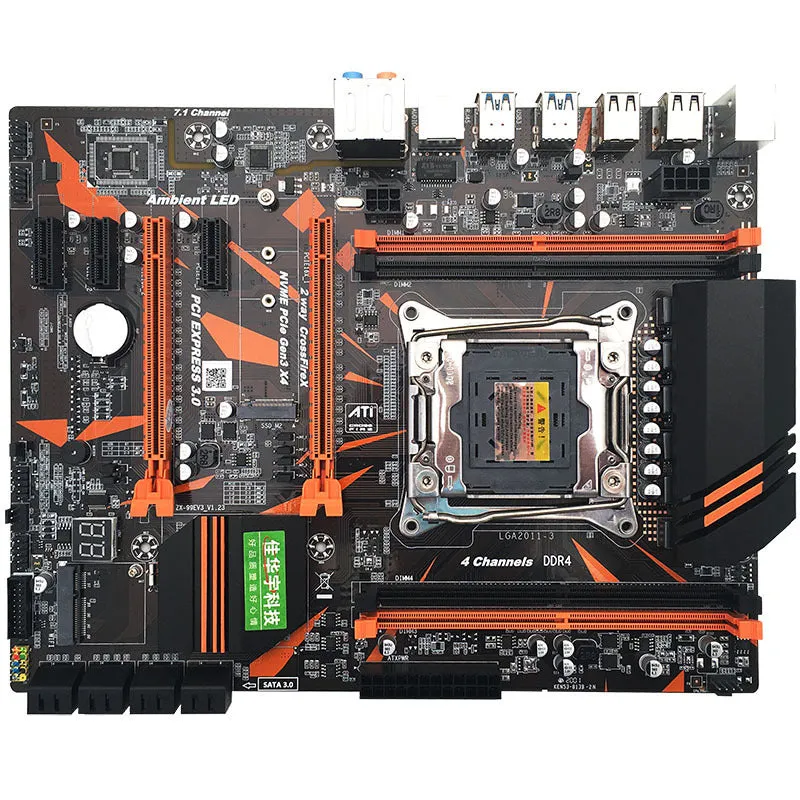
X99 computer motherboard for LGA2011-3 socket with four-channel DDR4 memory support, compatible with Intel Core i7 and Xeon E5 v3/v4 processors featuring dual PCI-E x16 slots, M.2 NVMe interface, and 7.1 channel audio


X99 computer motherboard for LGA2011-3 socket with four-channel DDR4 memory support, compatible with Intel Core i7 and Xeon E5 v3/v4 processors featuring dual PCI-E x16 slots, M.2 NVMe interface, and 7.1 channel audio
X99 Chipset Motherboard for LGA2011-3 Processors with Four-Channel DDR4 Memory Architecture

Designed for workstation and high-end desktop computing, this X99 motherboard provides the foundation for systems requiring substantial processing power and memory bandwidth. Based on Intel's X99 chipset, it accommodates both professional Xeon E5-2600 v3/v4 series processors and enthusiast-grade Core i7 CPUs through its LGA2011-3 socket. The platform's four-channel DDR4 memory architecture distinguishes it from mainstream platforms, offering significantly higher bandwidth for memory-intensive applications like video editing, 3D rendering, and scientific computing. With comprehensive expansion options including dual PCI-E x16 slots and NVMe storage support, this board delivers the connectivity needed for demanding professional workloads while maintaining compatibility with standard desktop components.
Processor and Memory Specifications

The motherboard's core specifications focus on supporting high-core-count processors and maximising memory performance through Intel's X99 platform architecture.
LGA2011-3 CPU Compatibility
This motherboard features Intel's LGA2011-3 socket, specifically designed for high-end desktop and workstation processors. It supports the Xeon E5-2600 v3 and v4 series (codenames Haswell-EP and Broadwell-EP) which offer up to 22 cores in dual-socket configurations, though this board operates in single-socket mode. For enthusiast users, it also accommodates Core i7 processors from the Haswell-E and Broadwell-E families, including the 5820K, 5930K, 5960X, 6800K, 6850K, 6900K, and 6950X. An important compatibility note specifies that when using Core i7 processors, the system cannot utilise registered ECC memory modules typically used in server environments, requiring standard unbuffered DDR4 modules instead.
Four-Channel DDR4 Memory
The motherboard implements four DDR4 DIMM slots arranged in a quad-channel configuration, a key advantage over mainstream dual-channel platforms. This architecture doubles the available memory bandwidth when all slots are populated with matched modules. The board supports DDR4 memory at 2400MHz and 2133MHz speeds, with capacity reaching up to 32GB per slot for a theoretical maximum of 128GB total system memory. It maintains compatibility with both standard desktop memory modules and registered ECC modules, though ECC functionality requires compatible Xeon processors. The memory controller's support for higher-density modules makes this platform suitable for virtualisation, large dataset analysis, and other memory-intensive applications.
Memory Configuration Guidelines
For optimal performance, users should populate memory in sets of four identical modules to activate the quad-channel architecture. When using fewer than four modules, consult the motherboard manual for proper slot placement to maintain dual-channel operation. The platform's memory compatibility encompasses various module types, but users must observe the processor-specific restrictions: Xeon processors can utilise either registered ECC or standard modules, while Core i7 processors require standard desktop memory exclusively. This distinction is particularly relevant for users transitioning from server to workstation configurations or building high-availability systems where ECC correction might be desirable.
Expansion and Storage Connectivity

The motherboard provides extensive expansion capabilities through multiple PCI Express slots and modern storage interfaces, accommodating both current and legacy components.
PCI Express Slot Configuration
Expansion options include two PCI-E x16 slots operating at full x16 bandwidth when used individually or potentially at x8/x8 in dual-GPU configurations, depending on the specific processor's PCI Express lane allocation. These slots support modern graphics cards for gaming, GPU computing, or multi-monitor professional applications. Additionally, three PCI-E x1 slots accommodate smaller expansion cards like additional USB controllers, sound cards, or network adapters. The PCI Express implementation derives from both the X99 chipset and directly from the processor, with exact lane distribution varying between different CPU models, particularly between 28-lane and 40-lane processors in the compatible lineup.
SATA and M.2 Storage Interfaces
Storage connectivity encompasses eight SATA 3.0 ports operating at 6Gbps, providing ample connections for hard drives, solid-state drives, and optical drives. These ports support RAID 0, 1, 5, and 10 configurations through the chipset's built-in capabilities. For high-performance storage, the board includes one M.2 slot supporting PCIe NVMe SSDs at full speed, bypassing SATA limitations for significantly faster data transfer. This interface is particularly beneficial for operating system installation, application loading, and working with large files. The combination of multiple SATA ports and NVMe support allows users to implement tiered storage strategies with fast NVMe drives for active projects and larger SATA drives for archival storage.
Legacy and Modern Ports
The rear I/O panel combines contemporary and legacy connectivity options, including four USB 3.0 ports and six USB 2.0 ports (with additional internal headers for front-panel connections). Network connectivity is provided by an integrated Realtek RTL8111H gigabit Ethernet controller, while audio capabilities include 7.1 channel output through three analogue audio jacks. A PS/2 port maintains compatibility with older keyboard and mouse peripherals, though most users will prefer USB alternatives. The inclusion of both modern high-speed interfaces and legacy ports ensures compatibility with a wide range of peripherals, from cutting-edge external storage to specialised industrial or professional equipment requiring specific connection types.
System Features and Practical Considerations
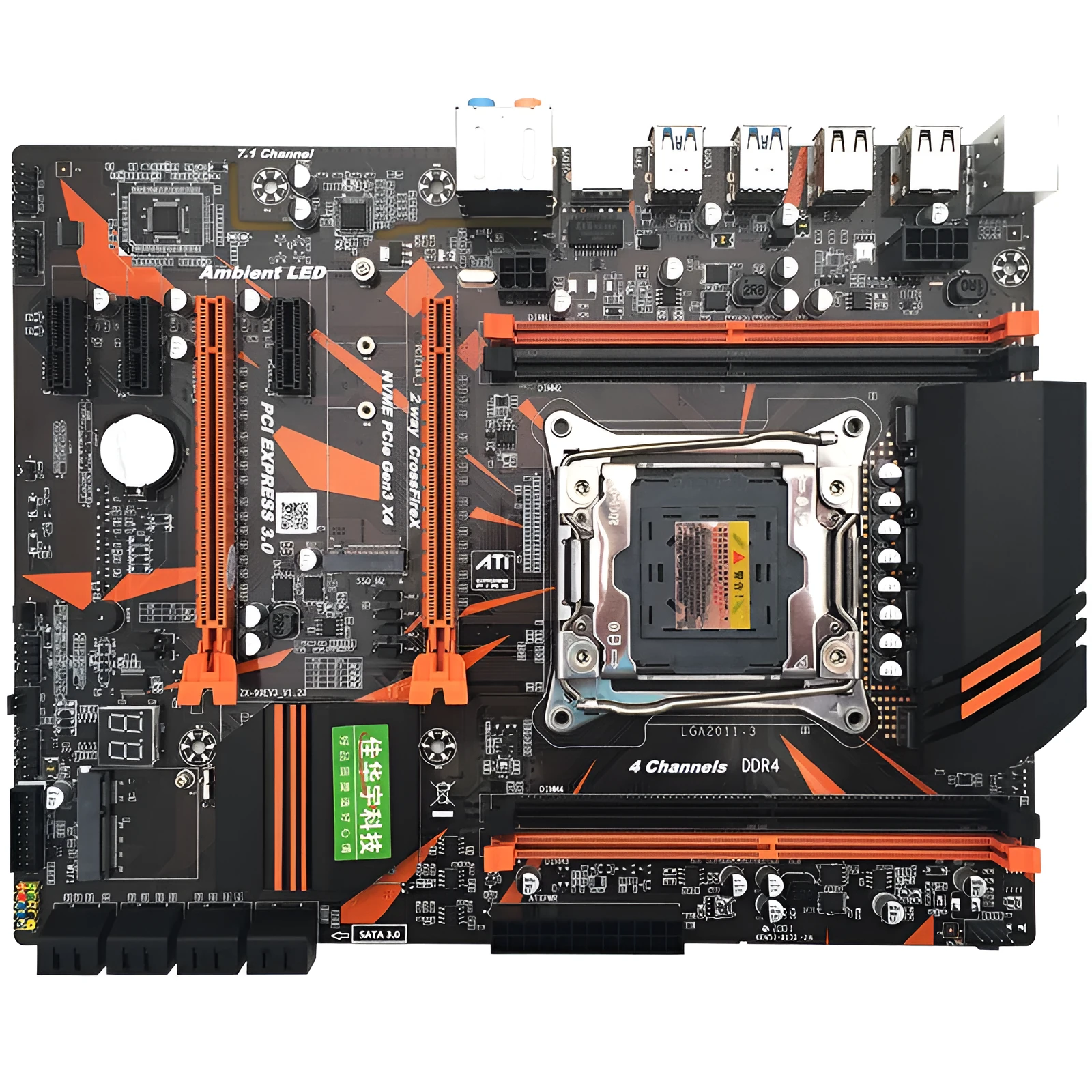
Beyond core specifications, the motherboard includes several features aimed at system reliability, troubleshooting, and practical installation considerations.
Power Delivery and Diagnostics
The motherboard employs a four-phase power design with solid capacitors to ensure stable voltage delivery to the processor under heavy loads. It requires both a 24-pin ATX main power connector and an 8-pin EPS12V CPU power connector, with a note that the 8-pin connector must be fully populated for reliable operation despite some power supplies offering only 4-pin variants. For troubleshooting, the board includes a digital fault diagnosis display that shows POST codes during system startup, complemented by an onboard buzzer for audible alerts. These diagnostic aids significantly simplify the process of identifying hardware issues during initial build or subsequent maintenance, particularly valuable in professional environments where system downtime must be minimised.
Audio and Visual Features
Audio capabilities centre on an integrated 7.1 channel codec providing surround sound output without requiring a separate sound card for most applications. The audio subsystem includes eight LED indicators that illuminate in sequence with audio playback, offering visual feedback of audio activity. While primarily aesthetic, these lights can confirm audio signal processing during system configuration. The networking implementation through the Realtek RTL8111H controller provides standard gigabit Ethernet performance suitable for most office and home networking environments, though users requiring 2.5GbE or 10GbE connectivity would need to add an appropriate expansion card.
Compatibility Notes and Warranty
Prospective builders should note several compatibility considerations: the black PCB colour may vary slightly between production batches as components are continuously optimised, and specific details like heatsink design or minor layout adjustments might occur without immediate page updates. The product carries a three-year warranty comprising one year of free service followed by two years of maintenance at cost, covering manufacturing defects but not incidental damage. When selecting components, ensure CPU cooler compatibility with LGA2011-3 socket mounting, verify memory module compatibility with your chosen processor type, and consider the physical clearance between the PCI-E x16 slots and large graphics card coolers when planning multi-GPU configurations.