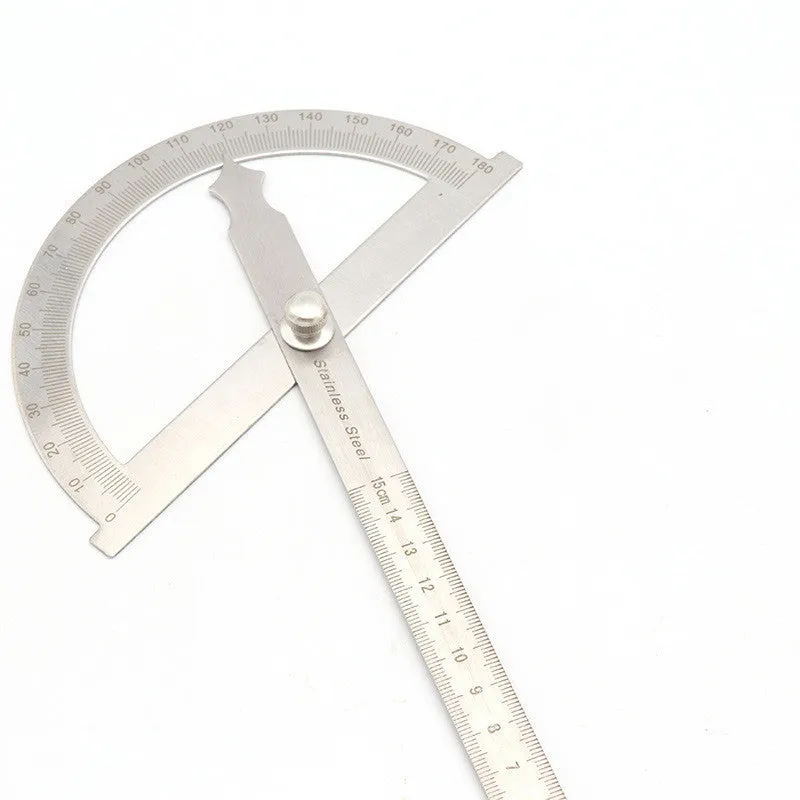
Adjustable protractor with 180° measuring range and 1° measurement accuracy in two hollow-large and solid-without trademark sizes of 15cm and 14.5cm for precise geometry, drafting, and technical drawing angles


Adjustable protractor with 180° measuring range and 1° measurement accuracy in two hollow-large and solid-without trademark sizes of 15cm and 14.5cm for precise geometry, drafting, and technical drawing angles
Adjustable Protractor with 1° Accuracy in 15cm and 14.5cm Sizes for Technical Drawing

This adjustable protractor is designed for tasks requiring precise angle measurement, such as technical drafting, geometry problems, engineering layouts, and woodworking projects. Its core function is to measure and set angles accurately within a full semicircle range from 0 to 180 degrees. The product is specified with a measurement accuracy of 1°, providing a reliable tool for applications where approximate angles are insufficient. It is offered in two distinct model variations, allowing users to select the size and style that best fits their specific project needs and handling preferences.
Features and Construction

The protractor's primary features are defined by its measurable specifications and the two available model types. The construction focuses on delivering the stated angle measurement capability without unnecessary complexity.
Material and Build
The source text does not specify the materials used in the protractor's construction. The design is described through its functional types: 'hollow-large' and 'solid-without trademark'. These terms suggest differences in physical structure—one being a larger, potentially open-frame design and the other a solid-bodied version without branded markings. The build prioritises the clear presentation of the 0-180° scale necessary for taking accurate readings.
Size and Practical Fit
The product is available in two precise sizes: a 15cm version described as 'hollow-large' and a 14.5cm version described as 'solid-without trademark'. This 0.5cm difference in size offers a choice for different working scales; the 15cm model may be better suited for larger drawings or more visible markings, while the 14.5cm model provides a slightly more compact tool. The size is a key practical differentiator, as it influences the tool's footprint on a drawing board or within a toolkit.
Uses and Placement

This tool is suited for both educational and professional environments where angle measurement is a fundamental requirement. Its use cases are directly tied to its technical specifications.
Event or Professional Use
In professional or workshop settings, the 1° accuracy and full 180° range make this protractor suitable for technical drawing, architectural planning, metalworking templates, and carpentry angle transfers. The adjustable feature allows drafters and makers to replicate specific angles precisely. The choice between the two models can be based on the detail required; the solid 14.5cm version might be preferred for finer work where a smaller tool is less obstructive.
Everyday Home Use
For home DIY projects, craft design, or student geometry work, this protractor offers a reliably accurate tool for tasks like plotting garden layouts, creating craft patterns, or completing school assignments. The clear scale and straightforward design make it accessible for non-specialists. The hollow-large 15cm model, with its potentially more open design, might offer easier alignment over existing lines on a page.
Benefits and Buying Value

The value of this protractor lies in its specified accuracy, choice of sizes, and focused functionality for angle-related tasks.
Reuse and Low Maintenance
As a simple measuring tool with no complex moving parts or electronic components, the protractor is designed for repeated use across multiple projects. Maintaining its accuracy relies on careful handling to prevent damage to the scale or pivot point. The lack of specified materials suggests a straightforward design that does not require specialised cleaning or maintenance procedures beyond general care.
Why Choose This Product
This adjustable protractor provides a clear choice based on its concrete specifications: the guaranteed 1° accuracy and the option between two distinct sizes (15cm hollow-large and 14.5cm solid). It avoids vague claims about performance, instead focusing on the measurable range and accuracy that are critical for drafting and design work. The availability of two models allows selection based on a tangible difference in size and construction style, rather than unsubstantiated aesthetic claims.