
STM32F103C8T6 ARM STM32 Minimum System Development Board module with ARM 32 Cortex-M3 CPU, 72MHz frequency, 64K flash, 20K SRAM, Mini USB interface for microcontroller development and core board projects


STM32F103C8T6 ARM STM32 Minimum System Development Board module with ARM 32 Cortex-M3 CPU, 72MHz frequency, 64K flash, 20K SRAM, Mini USB interface for microcontroller development and core board projects
STM32F103C8T6 ARM Cortex-M3 Minimum System Development Board with Mini USB Interface
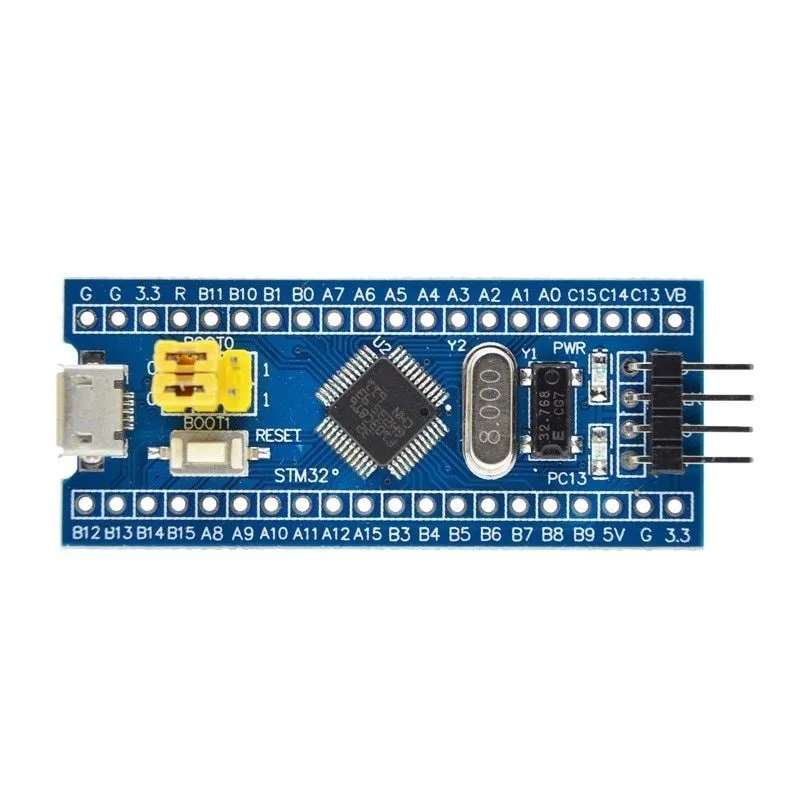
The STM32F103C8T6 minimum system development board provides engineers, students, and hobbyists with a complete hardware platform for embedded system development. Based on the popular ARM Cortex-M3 architecture, this board eliminates the initial circuit design phase, allowing users to concentrate immediately on software development and application testing. With its compact 5.3cm x 2.2cm form factor and comprehensive onboard features including power regulation, clock generation, and USB connectivity, this module serves as an efficient starting point for a wide range of microcontroller projects, from prototype development to educational purposes.
Technical Specifications and Hardware Features
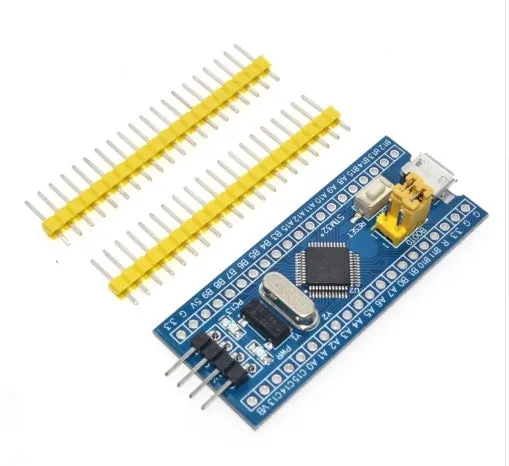
The development board centres around the STM32F103C8T6 microcontroller, which incorporates an ARM 32-bit Cortex-M3 core operating at 72MHz. This combination provides a balance of processing power and energy efficiency suitable for various embedded applications.
Processor and Memory Configuration
At the heart of the board is the STM32F103C8T6 microcontroller featuring the ARM Cortex-M3 CPU core. This 32-bit processor operates at a maximum frequency of 72MHz, providing substantial processing capability for embedded applications. The microcontroller includes 64K bytes of flash memory for program storage and 20K bytes of SRAM for data handling during operation. This memory configuration supports moderately complex applications while maintaining the board's accessibility for educational and prototyping purposes.
Power Supply and Clock System
The board accepts a power supply range of 2.0-3.6V for its I/O operations, accommodating various power source configurations. It incorporates power-on reset (POR) and power-down reset (PDR) circuitry to ensure reliable startup and shutdown sequences. The clock system supports an external crystal oscillator in the 4-16MHz range, providing flexibility in timing requirements for different applications while maintaining stable operation.
Physical Dimensions and Connectivity
With dimensions of 5.3cm x 2.2cm, this development board maintains a compact footprint suitable for space-constrained projects or integration into larger systems. The Mini USB interface serves dual purposes: providing power to the board and enabling USB communication capabilities. This design simplifies setup by reducing the number of required connections and cables during development sessions.
Development Capabilities and Application Scenarios
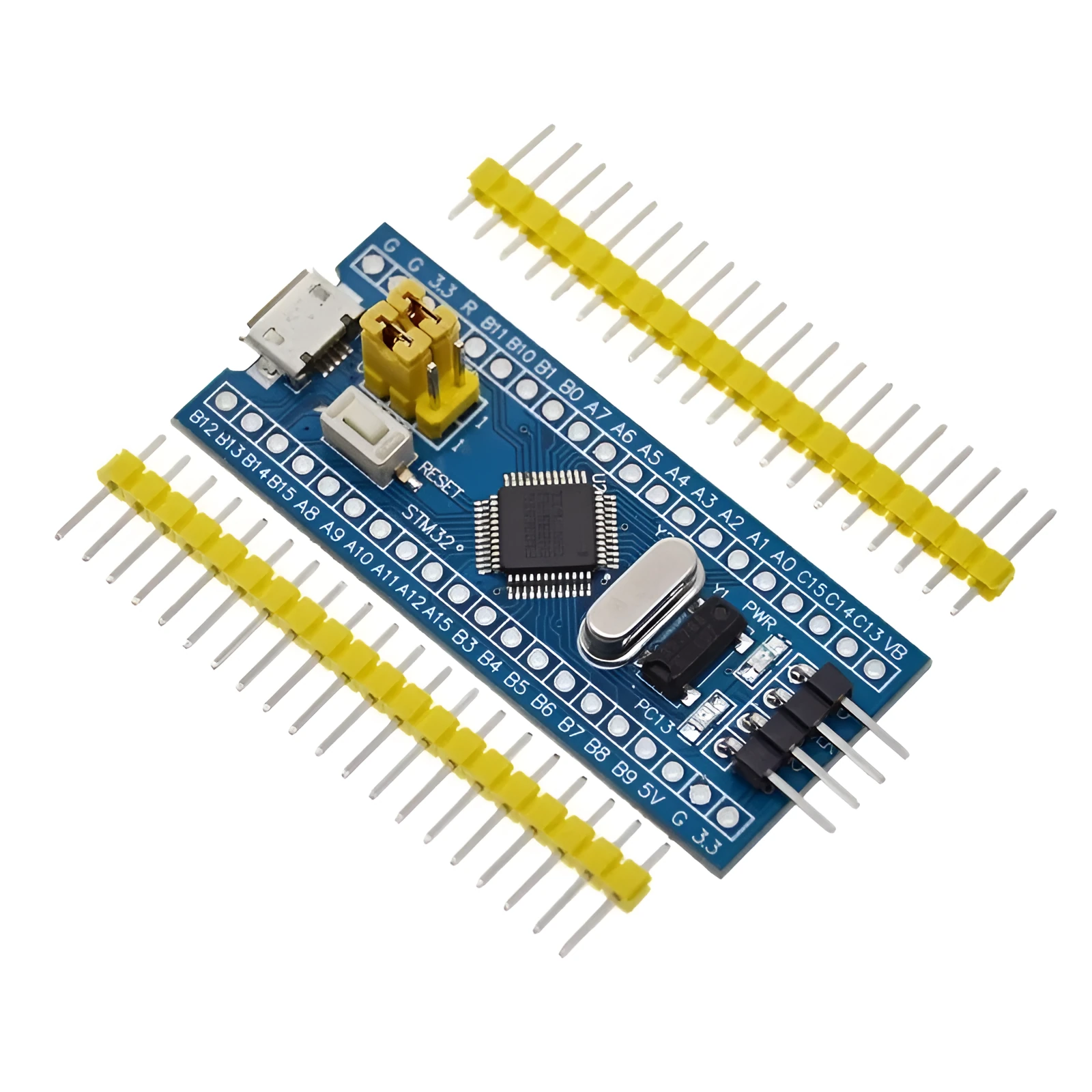
This minimum system board reduces the initial hardware development phase, allowing programmers and engineers to focus on software implementation and testing across various application domains.
Embedded System Prototyping
The board functions as an efficient prototyping platform for embedded system development, particularly for applications based on the ARM Cortex-M3 architecture. Developers can utilise the available I/O pins, memory resources, and processing power to create functional prototypes without designing custom circuitry from scratch. This approach accelerates the development cycle and reduces initial project costs for proof-of-concept implementations.
Educational and Learning Environments
In academic settings, this development board provides students with hands-on experience with ARM microcontroller programming and embedded system design. The included Mini USB interface simplifies connection to development computers, while the SWD debugging interface supports step-by-step program execution analysis. These features create an accessible learning environment for understanding microcontroller architecture and real-time system implementation.
Small-Scale Project Development
The board's specifications make it suitable for developing small-scale embedded applications, including sensor interfaces, control systems, and data acquisition projects. The 72MHz processing speed and available memory resources support applications requiring moderate computational capability while maintaining power efficiency. The compact size allows for integration into finished products or demonstration setups.
Practical Advantages and Development Workflow
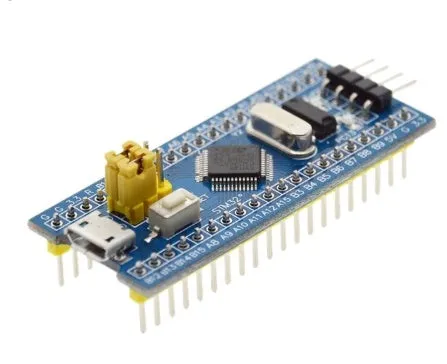
The minimum system approach embodied by this development board offers several practical benefits for both experienced engineers and those new to microcontroller development.
Simplified Development Setup
By incorporating essential components like voltage regulation, clock generation, and basic connectivity, this board eliminates the need to source and assemble these elements separately. Developers can connect the board via the Mini USB port and begin programming immediately using compatible development environments. This streamlined setup process reduces initial project overhead and allows concentration on application-specific requirements rather than foundational circuitry.
Debugging and Program Management
The board supports SWD (Serial Wire Debug) interface for programming and debugging operations. This industry-standard debugging protocol enables features like breakpoints, watchpoints, and memory inspection during program execution. Combined with the onboard resources, this debugging capability facilitates efficient identification and resolution of programming issues throughout the development process.
Transition from Prototype to Production
Using this development board during the prototyping phase allows for validation of both hardware interfacing concepts and software algorithms before committing to custom PCB design. The compatibility between the development board environment and potential production hardware based on the same microcontroller simplifies the transition from prototype to final product, reducing development risks and timeline uncertainties.