
WIFI development board based on ESP-8266EX microcontroller with Arduino IDE compatibility, 11 digital I/O pins, 1 analogue-to-digital converter input, onboard 5V 1A switching power supply, and OTA wireless upload capability for IoT projects


WIFI development board based on ESP-8266EX microcontroller with Arduino IDE compatibility, 11 digital I/O pins, 1 analogue-to-digital converter input, onboard 5V 1A switching power supply, and OTA wireless upload capability for IoT projects
ESP-8266EX WIFI Development Board with Arduino Compatibility and OTA Updates
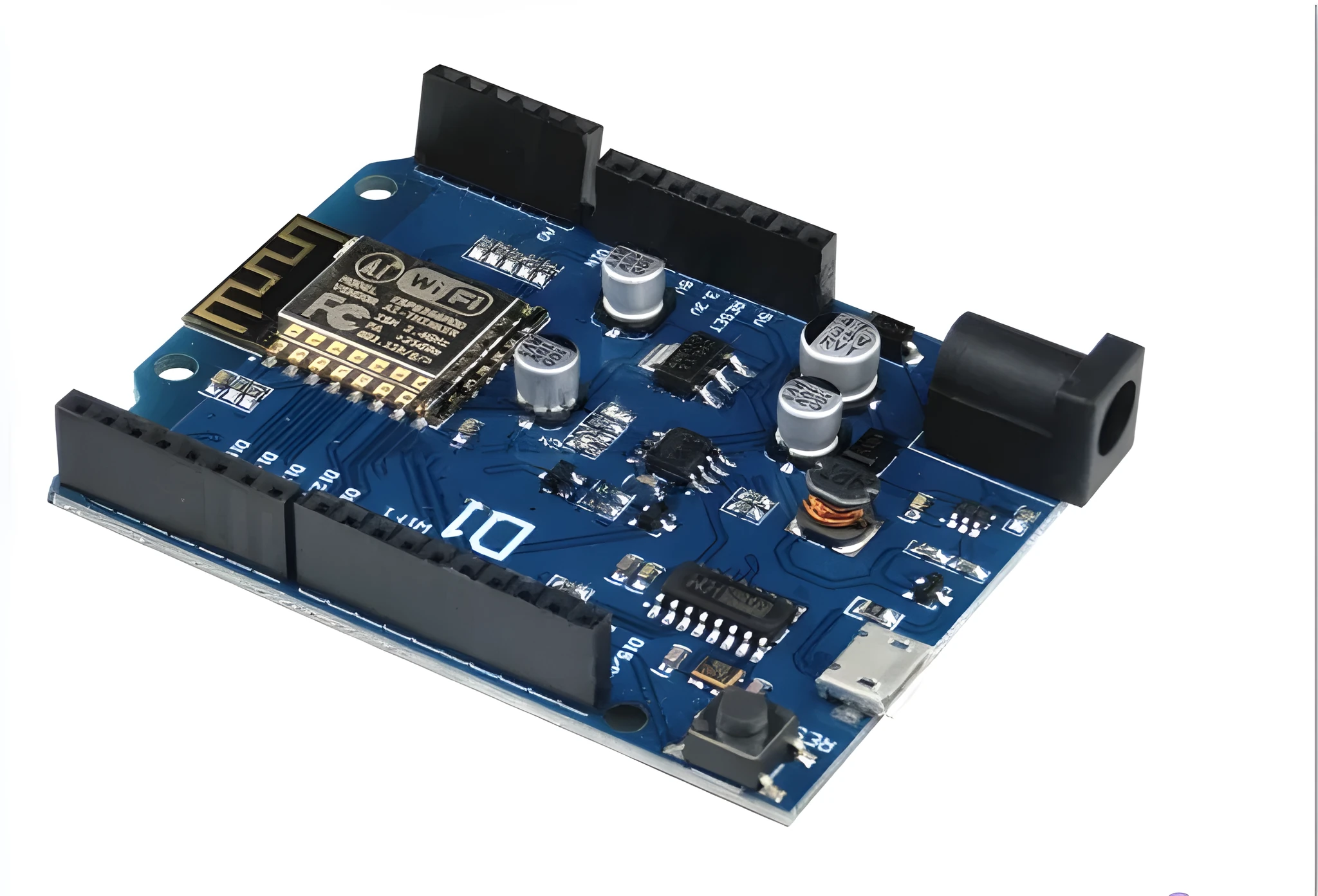
This development board provides a streamlined platform for creating Internet of Things (IoT) prototypes and connected devices. Centred on the popular ESP-8266EX microcontroller, its primary advantage is direct compatibility with the Arduino Integrated Development Environment (IDE). This means developers accustomed to the workflow of boards like the Arduino UNO can transition to wireless projects without learning a new programming toolchain. The board comes ready with WIFI connectivity, an onboard power supply, and supports Over-The-Air (OTA) updates, making it a practical foundation for both learning and functional project deployment.
Features and Construction

The board is built around the core ESP-8266EX chip, which handles WIFI communication and processing. The construction focuses on providing accessible input/output for connecting sensors, lights, motors, and other electronic components, facilitated by standard pin headers.
Material and Build
The board is a standard printed circuit board (PCB) populated with the ESP-8266EX microcontroller, voltage regulation circuitry for the onboard power supply, pin headers for the I/O connections, and supporting electronic components. The build is designed for prototyping, with clear pin labelling to assist with wiring. The switching power supply component is integrated to deliver stable 5V power to the board and connected peripherals.
Size and Practical Fit
While exact dimensions are not specified, the board follows a typical development board form factor. Its design includes multiple mounting holes, suggesting it can be secured within an enclosure or to a surface for permanent projects. The pin layout and spacing are standard, making it compatible with breadboards and many accessory shields designed for similar microcontroller platforms.
Uses and Placement
This board is suited for a wide range of connected device projects, from simple home automation to more complex sensor networks. Its Arduino compatibility lowers the barrier to entry, making it appropriate for educational settings, hobbyist workshops, and professional prototyping.
Event or Professional Use
For professional prototyping or proof-of-concept development, the board's OTA update capability is a significant practical feature. It allows developers to push firmware updates to deployed devices without physical access, useful for testing in the field or updating a network of sensors. The robust 5V 1A power supply, accepting up to 24V input, provides flexibility in powering the board from various sources, including battery packs or regulated DC adapters.
Everyday Home Use
Hobbyists can use this board to create smart home gadgets like WIFI-connected temperature monitors, smart lights, or garden watering systems. The 11 I/O pins and ADC input enable interaction with common components like buttons, LEDs, and analogue sensors. Programming via the familiar Arduino IDE simplifies the process, with a vast library of existing code examples and community support available online.
Benefits and Buying Value
The value of this board lies in its integration of key features required for modern IoT projects into a single, programmer-friendly package. It eliminates the need for separate WIFI shields or complex programming setups, offering a cohesive development experience.
Reuse and Low Maintenance
The board is designed for repeated use across different projects. Its durable PCB and standard components can withstand the plugging and unplugging typical of prototyping. The OTA functionality reduces long-term maintenance hassle by enabling remote troubleshooting and feature updates, extending the useful life of any device built around it.
Why Choose This Product
Choose this board if you need a capable WIFI-enabled development platform that works within the established Arduino ecosystem. It is particularly suitable if your project requires remote updates or if you are transitioning from basic Arduino projects to connected devices. The inclusion of a capable onboard power supply also removes the need for an external regulator in many cases, simplifying your overall circuit design.